
The Executive Wanted Blood
The day I learned that following orders and using judgment can both get you fired — and what I do differently now.

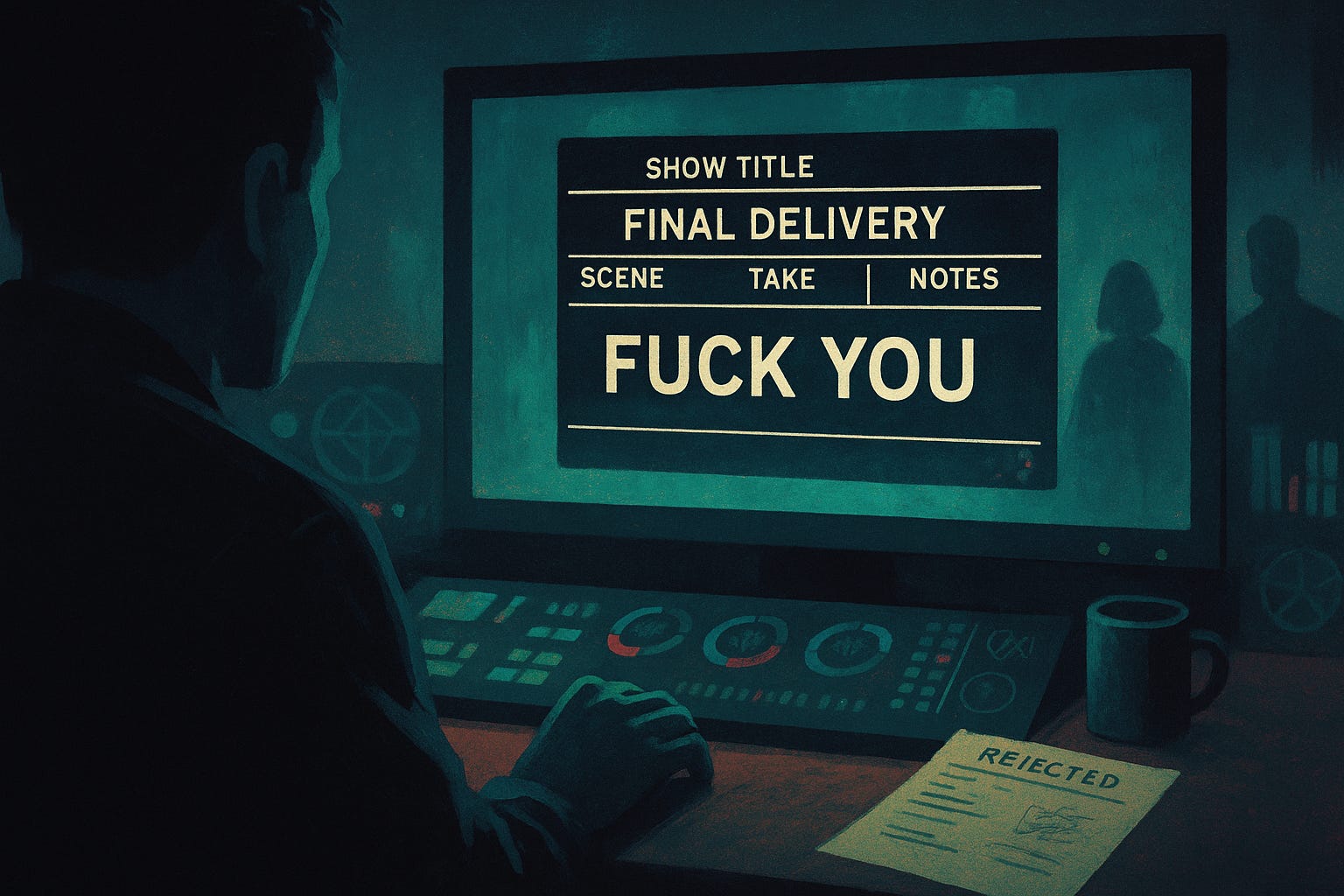
It was my first tapeless delivery — and one of the first MTV had ever received.
Everyone was figuring it out. Half the industry still worked in tape, the other half stumbling through digital delivery like it was a new religion nobody understood.
Two specs landed on my desk.
Both labeled official.
Both written by different people.
Both wrong in different ways.
The tape spec required one kind of slate — the tapeless spec required a completely different one.
Same space. Conflicting instructions. Both required.
So I made a professional call.
I used my judgment.
I built a single combination slate that covered both — every piece of information either spec could possibly need.
The show was technically perfect. The delivery clean.
But the leader didn’t match the tape spec exactly.
Rejected.
Anyone who’s ever worked in post knows a rejection isn’t the end of the world. You fix it and move on. It happens all the time.
But that’s not what happened here.
The production company called — relaying the network’s fury from above.
The person on the other end told me the show had been rejected and that I’d “messed up.”
The network executive wanted blood.
She demanded someone be fired — over a slate.
It was absurd.
Everyone in the industry knew deliveries got bounced all the time; it was routine. But this wasn’t about the show anymore — it was about blame.
And because I was young and desperate to prove I could handle it, I did the worst thing you can do when people are looking for a scapegoat:
I volunteered.
“If it’s that bad,” I said, “I’ll resign.”
There was a pause on the line. Not compassion — calculation. The kind of silence you hear when someone realizes how far they can push you.
Then came the verdict.
“Don’t ever use your best judgment again,” she said. “Do exactly what the network says.”
That’s when I realized the system didn’t actually want competence.
It wanted obedience.
I was volunteering nights and weekends, trying to be indispensable to a system that didn’t care about my sanity, my time, or even my insight.
Fine. I thought. I’ll do exactly what I’m told.
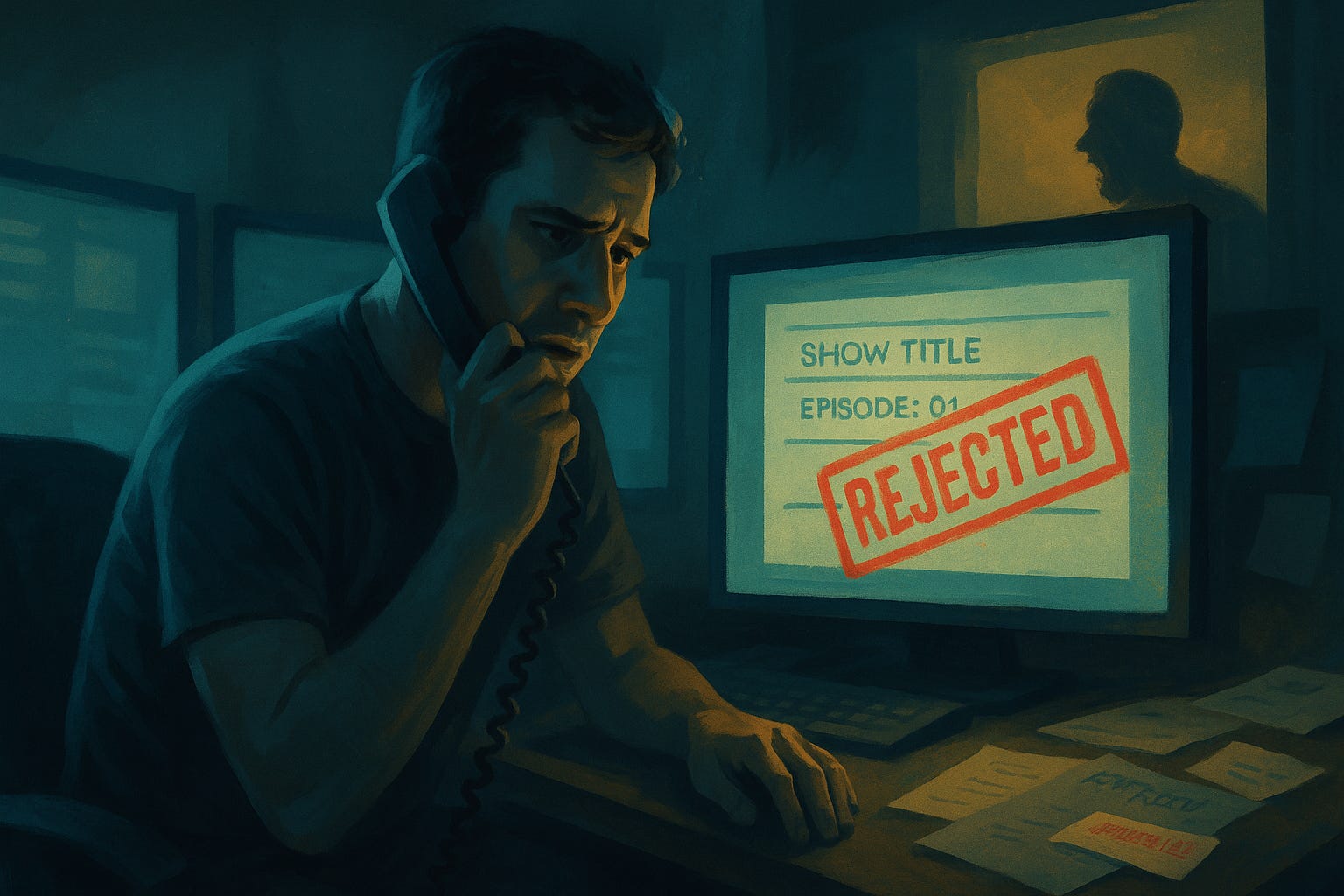
The Second Call
A day later, they needed promo materials.
This time, I made sure everything was in writing.
Please confirm exactly how you want this delivered, I wrote.
The reply came back almost instantly — confident, definitive, and completely wrong.
Every line contradicted common sense.
I even asked, Are you sure?
“Yes.”
End of discussion.
So I followed it exactly.
No interpretation. No correction. No fixing what I knew was broken.
I did exactly what they told me to do.
And it failed again.

The second call came from the same production contact.
She was frustrated — running on the panic that comes from being stuck in the middle.
“The network says it’s wrong again. What happened this time?”
I said, calmly,
“I did exactly what you told me to do. Exactly what they confirmed. You told me not to use my best judgment, and I didn’t. I followed instructions. Now it’s wrong again.”
It got quiet on her end — that half-second where someone realizes what they’ve actually asked of you.
Then her voice changed. Softer. Honest.
“You’re right.”
I didn’t blame her.
She didn’t write the specs. She didn’t understand the technical side.
All she knew was she’d gotten a furious phone call, and that the relationship with the network was on the line.
She was doing her job.
And I respected her for that.
When she saw how absurd it was — how I’d been yelled at for thinking and then again for not thinking — she stood up for me.
That almost never happens in this business.
That moment stayed with me.
The Theater of the Call
The network’s executive producer called a meeting: me, the EP, a coordinator, another manager.
They decided to read through the spec with me, line by line, over speakerphone.
Like a classroom punishment.
They were reading the wrong spec.
I let them go for a few pages before interrupting.
“You’re reading the wrong version,” I said. “The correct one says something else.”
Shuffling. Silence.
I walked them through the contradictions: line by line, note by note, which one was newer, which one contradicted the other.
Finally someone muttered,
“No one’s ever pointed that out before.”
No. Shit.
No one reads it. They just forward it and hope the next person takes the hit.
That was the moment I understood the real job.
It wasn’t delivering shows.
It was absorbing confusion so everyone else could pretend the system worked.
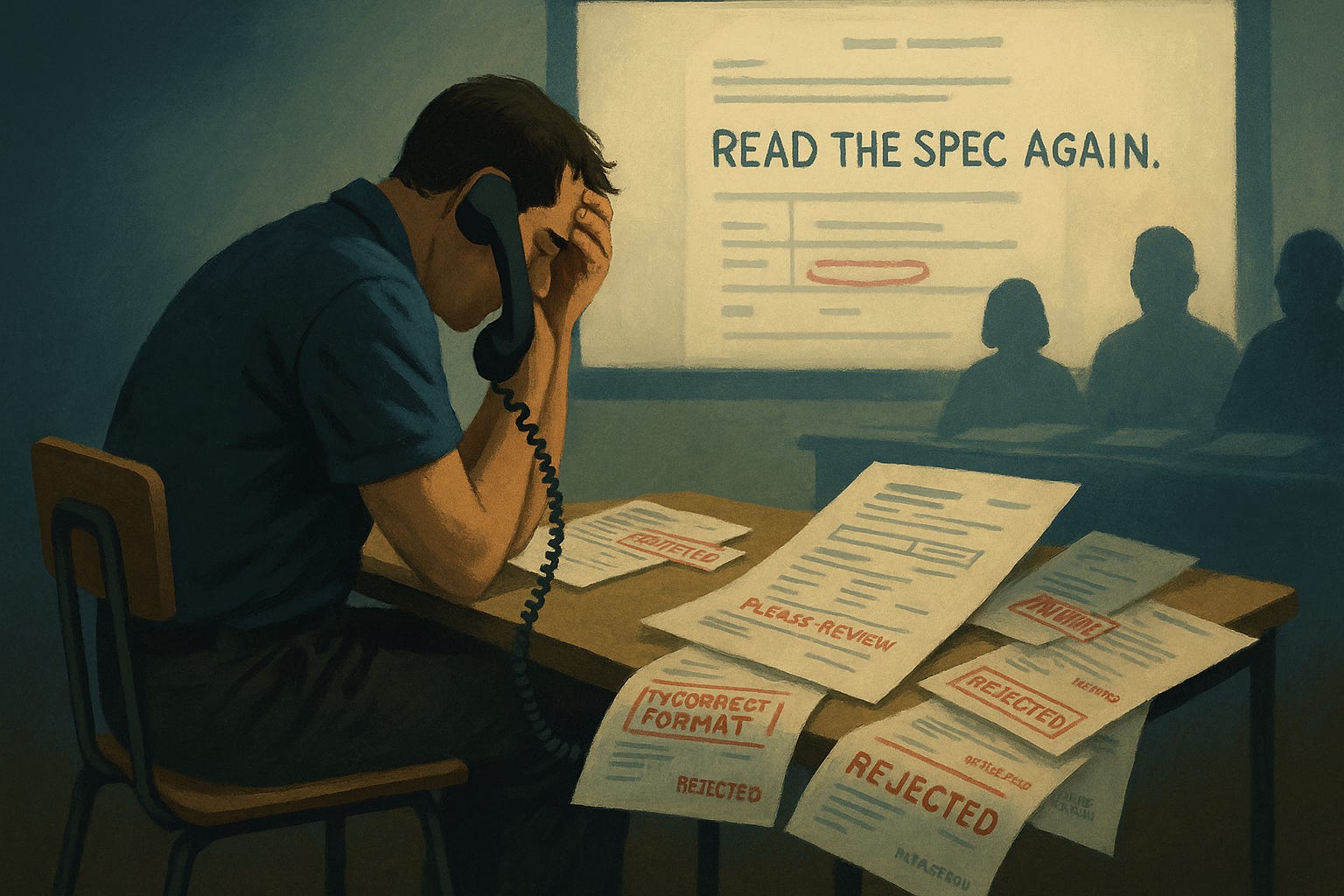
The show eventually passed.
No apology. No thank-you. Just the next episode on the calendar.
I stayed late that night — not to prove anything, just to sit there and process it.
I’d been right twice, and it hadn’t mattered either time.
After that, I made my own rules:
If specs conflict, flag it once, in writing.
If they confirm something wrong, follow it exactly — and save the email.
Never argue twice.
Never expect the apology.
I cared because I was scared — scared to lose my job, scared to be called difficult, scared that thinking would get me punished again.
Years later, I still remember her voice on that second call — tired, honest, human.
“You’re right.”
She didn’t have to say it. It didn’t fix anything.
But it mattered.
Because she could have doubled down, but she didn’t.
She stopped. She listened. She gave me back my dignity with two words.
That stayed with me.
Now, when I’m the one on the other end of the line —
when someone younger, quieter, or lower on the chain tells me something I don’t want to hear —
I try to remember that moment.
And I say it out loud.
“You’re right.”
Not because it fixes everything.
But because someone needs to hear it once.
Because that’s where leadership actually starts.