
Choosing an AI Model Is Not the Decision You Think It Is
How to think about AI in your business without creating new risks

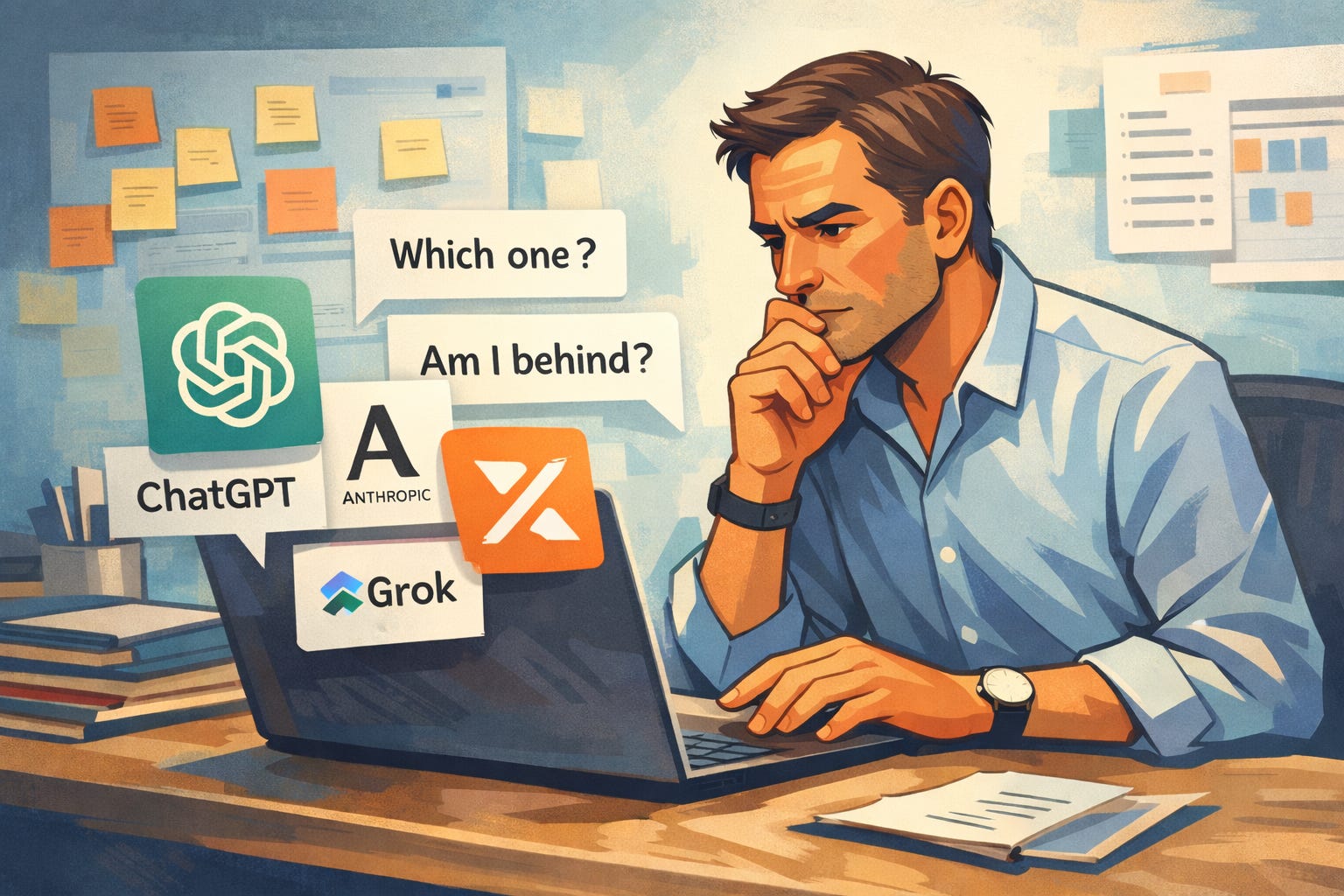
Everyone keeps asking the same AI question:
“Which one should I use?”
ChatGPT. Claude. Grok. Whatever just showed up in the news this week.
The assumption underneath that question is that there’s a right answer—and that if you pick the wrong one, you’re somehow falling behind.
For most businesses, that framing is already wrong.
AI Is Not a Competitive Sport for Most Businesses
If you run a real company—services, professional work, trades, real estate, accounting, legal, construction, client services—AI is not something you “win.”
It’s not a leaderboard.
It’s not a badge of sophistication.
And it’s not something you should be chasing release by release.
What you’re actually deciding is simpler—and more consequential.
You’re deciding what you want your business to depend on.
The Part No One Wants to Say Out Loud
Most business owners don’t actually want AI strategy.
They want relief.
They want:
fewer things slipping through the cracks
fewer follow-ups that only happen because someone remembers
less mental overhead tracking work
fewer mistakes caught only by double-checking
AI gets pulled into the conversation because it sounds like leverage.
Sometimes it is.
But here’s the uncomfortable truth:
If your operation already relies on people “keeping an eye on things,” AI does not fix that.
It accelerates whatever system you already have.
Loose systems get looser—faster.
Unclear systems scale confusion.
Manual oversight becomes automated oversight.
That’s why so many people try AI, feel excited for two weeks, and then quietly stop using it.
The problem was the business, not the model.
Why the AI Arms Race Isn’t Your Job
The major AI models are locked in an arms race.
They leapfrog each other constantly.
What looks “better” today will be matched or beaten quickly.
The differences people argue about online—benchmarks, edge cases, micro-advantages—rarely show up in normal business use.
Unless AI is literally what you sell, obsessing over which model is smartest is like a contractor obsessing over which brand of calculator has the best buttons.
It’s not the work.
What actually matters is the company behind the model:
Will they still be around?
Will pricing suddenly change?
Will access tighten?
Will behavior shift underneath workflows you’ve already built?
That’s the real risk.
Not output quality.
Personality Problems Aren’t Intelligence Problems
A lot of people say they’re “done with ChatGPT” because it’s annoying.
Too agreeable.
Too chatty.
Too much “you’re right to call this out.”
That’s fair.
But it’s not a sign the model is dumb.
It’s a sign you’re seeing defaults.
Most people never adjust instructions or constrain tone. They judge the entire system by the voice it speaks in.
That voice will change.
What doesn’t change is whether your business has a place for the output to land.
If this is useful, subscribe.
If it’s helpful to you, subscribing tells us to keep going.
The Question You Should Be Asking Instead
Instead of asking:
“Which AI should I use?”
Ask this:
What part of my business only works because someone is watching it?
If the answer is “a lot,” then AI isn’t your bottleneck.
Structure is.
AI works when there’s something clear to plug into:
a defined workflow
a known handoff
explicit ownership
Without that, it becomes just another layer on top of the same manual oversight you already had.
That’s where most disappointment comes from.
How We Think About This Ourselves
In our own work, we’ve invested heavily in one ecosystem—not because it’s perfect, but because it was stable enough to build around at the time.
We monitor whether that continues to be true.
If it stops being true, we’ll change course.
That’s not brand loyalty.
That’s operational judgment.
The goal isn’t to pick right forever.
It’s to avoid anchoring your business to something fragile without realizing it.
If You’re Just Poking Around
If you’re early or experimenting:
pick one
use it lightly
learn where it helps and where it breaks
Don’t confuse experimentation with progress.
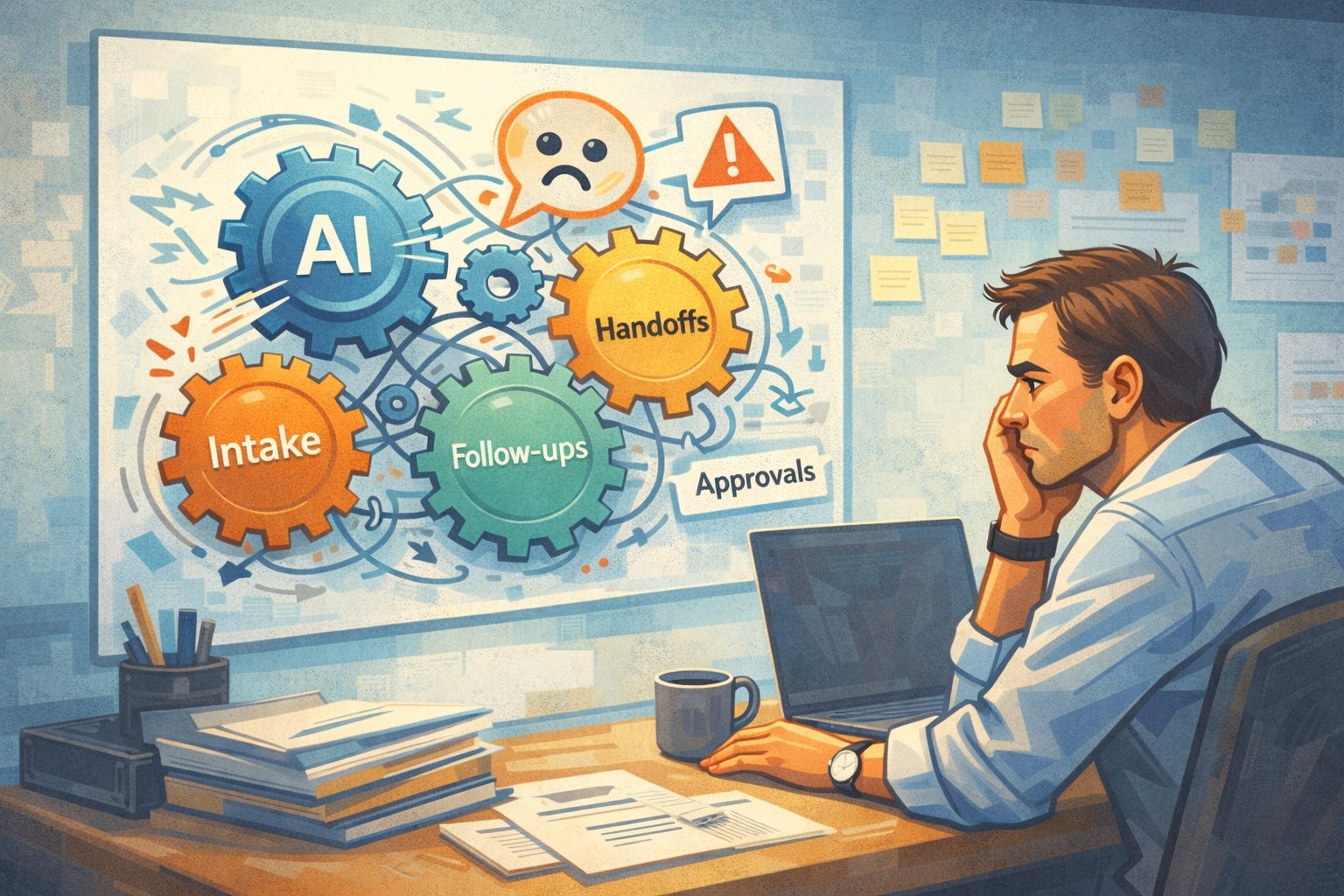
But if you’re trying to use AI to actually run parts of your business—intake, follow-ups, approvals, handoffs—the model matters far less than whether the system underneath it can hold weight.
That’s the part most people skip.
And it’s why so many “AI initiatives” quietly die after the novelty wears off.
Not sure how AI actually fits into your business?
We offer a focused AI business readiness consultation to evaluate where AI can safely create leverage — and where it’s more likely to introduce risk or noise.
Normally a $500 engagement.
Currently offered at $250.